

What is bee-infested wood? Protect your home from damage
Many homeowners believe carpenter bees are harmless pollinators, but they tunnel into your wooden structures creating galleries that weaken beams, siding, and decks. Understanding what bee-infested wood looks like and how to prevent it saves you from expensive structural repairs. This guide helps you identify carpenter bee damage early and take action before minor holes become major problems.
Table of Contents
- What Is Bee-Infested Wood? Understanding Carpenter Bee Damage
- Which Woods Are Most Vulnerable To Carpenter Bees?
- How To Identify Bee-Infested Wood In Your Home
- Preventing And Treating Bee-Infested Wood Effectively
- Protect Your Wooden Structures With K9 Nox Artisan Crafts Solutions
- Frequently Asked Questions
Key takeaways
| Point | Details | |-------|---------|| | Carpenter bee damage | Carpenter bees bore tunnels into wooden structures to raise larvae, creating galleries that weaken wood over time. | | Preferred wood types | They favor untreated softwoods like pine, cedar, and redwood, especially when unpainted or weathered. | | Early detection saves money | Spotting entrance holes and sawdust piles beneath them prevents tunnels from expanding into costly structural damage. | | Prevention is key | Painting or staining wood and sealing cracks blocks carpenter bees from establishing nests in your structures. | | Effective treatments exist | Insecticidal dust application kills active nests when applied directly into entrance holes at dusk. |
What is bee-infested wood? Understanding carpenter bee damage
Bee-infested wood refers to wooden structures damaged by carpenter bee tunneling activity. Unlike termites that eat wood for nutrition, carpenter bees bore into wood to create nest galleries where they lay eggs and raise young. The damage appears as round entrance holes approximately half an inch wide, with tunnels extending several inches or even feet inside the wood grain.
You’ll recognize infested wood by several telltale signs. Sawdust piles collect beneath entrance holes as bees excavate tunnels. Fan-shaped yellow or brown stains appear around holes from bee excrement. Buzzing or scratching sounds come from inside the wood when bees are actively tunneling.
Carpenter bees work alone rather than in colonies, but they often return to the same location year after year. Each generation expands existing tunnels or creates new galleries nearby. What starts as cosmetic damage gradually compromises structural integrity as tunnels multiply and intersect.
Repeated carpenter bee activity in the same wooden element creates a honeycomb effect that significantly reduces load-bearing capacity.
The damage becomes particularly concerning in these situations:
- Deck posts and railings where tunnels weaken support structures
- Roof eaves and fascia boards that protect your home from weather
- Window and door frames where galleries allow moisture infiltration
- Wooden siding that becomes porous and vulnerable to rot
Homeowners often discover the problem too late because carpenter bees create nests internally with minimal external evidence initially. By the time multiple entrance holes appear, extensive tunnel networks may already exist inside. Protecting your investment starts with recognizing these patterns early, which you can learn more about at K9 NOX ARTISAN CRAFTS.
Which woods are most vulnerable to carpenter bees?
Softwoods face the highest risk of carpenter bee infestation due to their texture and ease of excavation. Carpenter bees prefer redwood, cedar, cypress, and pine, especially when old and unpainted. These woods allow bees to tunnel efficiently while providing suitable environments for raising larvae.
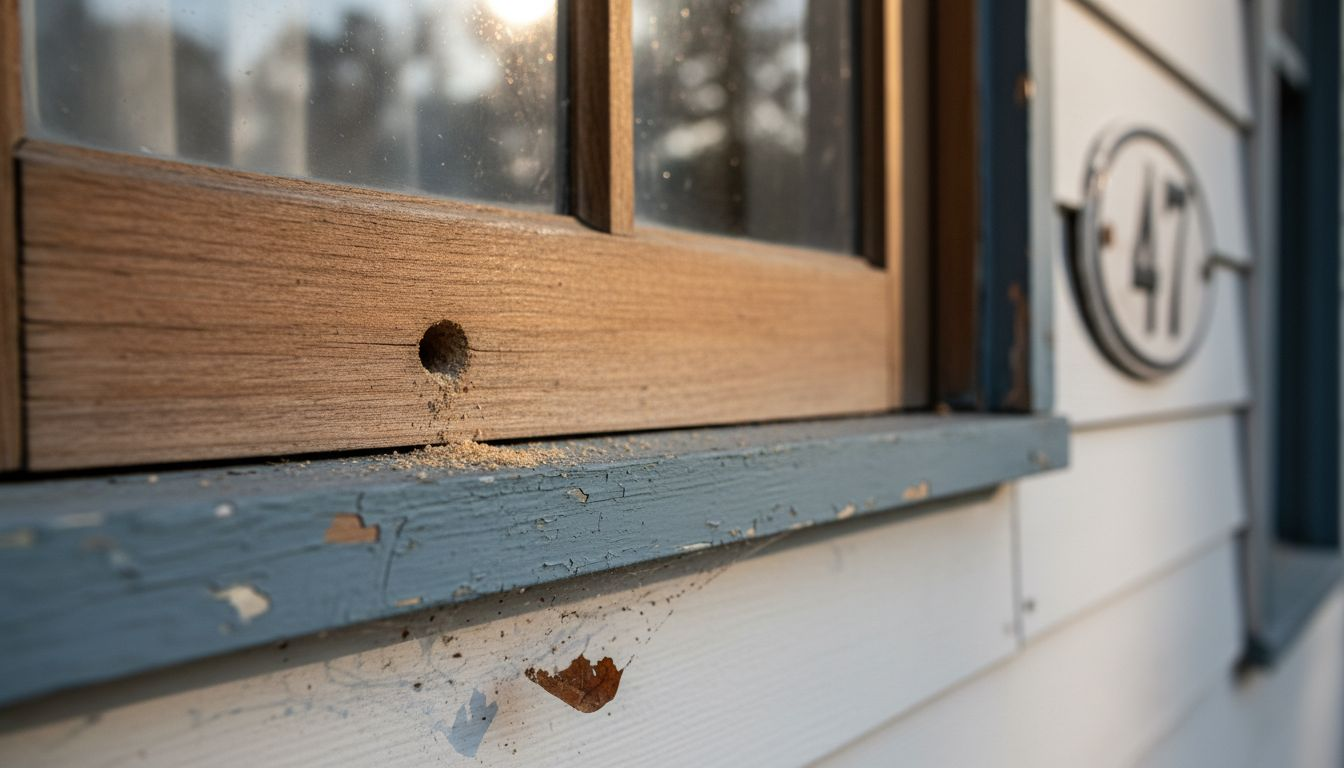
Wood condition matters more than species in many cases. Untreated, unpainted wood attracts carpenter bees significantly more than finished surfaces. Paint and stain create barriers that discourage bees from boring initial entrance holes. Weathered wood with cracks or imperfections provides ideal starting points for excavation.
Moisture content plays a critical role in wood vulnerability. Carpenter bees favor wood with high moisture content because it’s softer and easier to tunnel through. Damp or poorly ventilated wood becomes prime real estate for nesting activity. Structures near sprinkler systems or in humid climates face elevated risk.
| Wood Type | Vulnerability Level | Key Characteristics |
|---|---|---|
| Pine | High | Soft texture, widely used in construction, affordable |
| Cedar | High | Aromatic resins attract bees, common for outdoor furniture |
| Redwood | High | Weather-resistant but soft, popular for decks |
| Cypress | Moderate to High | Natural oils attract bees despite decay resistance |
| Oak | Low | Dense hardwood difficult for bees to excavate |
| Treated lumber | Low | Chemical treatments deter boring activity |
Cedar and cypress present interesting cases because their natural resins and oils attract carpenter bees even though these woods resist decay. The aromatic compounds that protect against rot simultaneously draw bees seeking nesting sites.
Hardwoods like oak provide natural protection due to density. Bees struggle to bore through tight grain patterns and prefer easier alternatives. However, no wood type offers complete immunity, especially once weathering creates vulnerable spots.
Assess your property’s risk by identifying untreated softwood elements exposed to weather. Prioritize protecting these vulnerable areas with preventative measures. Consider simple carpenter bee traps near high-risk wooden structures to intercept bees before they establish nests.
How to identify bee-infested wood in your home
Spotting carpenter bee activity early prevents minor damage from becoming structural problems. Early detection of activity is crucial to avoid costly repairs. Spring inspections yield the best results because carpenter bees emerge from winter dormancy and begin boring new tunnels or expanding existing ones.
Look for these specific warning signs during your inspection:
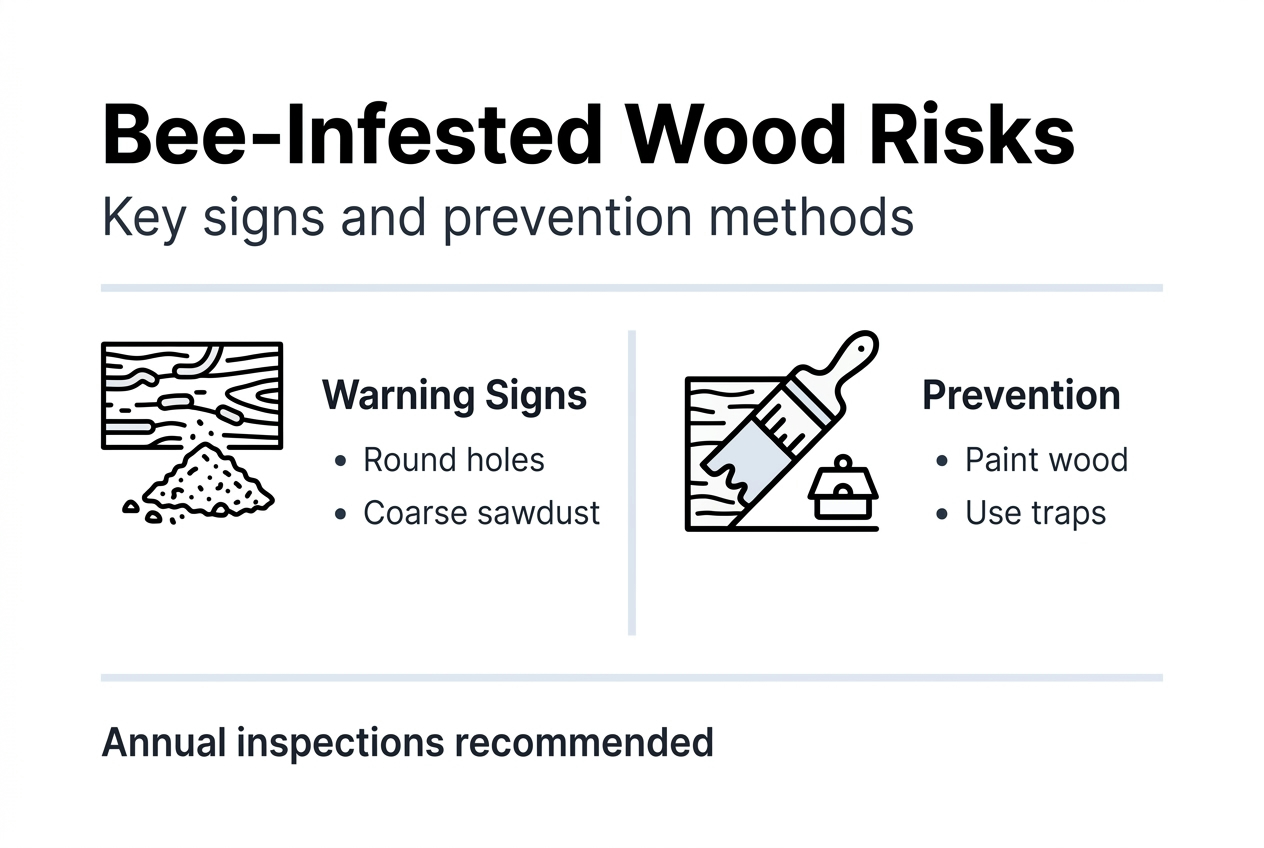
- Round entrance holes measuring approximately half an inch in diameter on wood surfaces
- Fresh sawdust or wood shavings piling beneath holes, often with a coarse texture
- Buzzing or scratching sounds emanating from inside wooden elements
- Yellow or brown staining around entrance holes from bee excrement
- Fan-shaped marks radiating from hole openings
- Large black and yellow bees hovering near wooden structures in spring
Entrance holes typically appear on horizontal or vertical wood surfaces that receive direct sunlight. Eaves, fascia boards, window trim, deck railings, and fence posts are common targets. Bees often select wood undersides or areas protected from rain for tunnel entrances.
Sawdust characteristics help distinguish carpenter bee activity from other wood-boring insects. The frass appears as coarse shavings rather than fine powder. Fresh piles indicate active tunneling, while old sawdust suggests previous seasons’ damage that may still harbor larvae.
Audio cues provide valuable detection clues. Place your ear near suspected infestation areas and listen for scratching, chewing, or buzzing sounds inside the wood. Activity peaks during warm spring days when adult bees actively excavate and provision nests.
Pro Tip: Perform your most thorough inspections between March and June when carpenter bees are most active for timely intervention before extensive tunneling occurs.
Distinguish carpenter bees from harmless lookalikes by observing their appearance. Carpenter bees have shiny, hairless black abdomens, while bumblebees display fuzzy, yellow-banded abdomens. Male carpenter bees often hover aggressively near nests but cannot sting, though females can deliver painful stings if threatened.
Document your findings with photos showing hole locations and damage extent. This record helps track whether infestation is growing and provides useful information if you need professional pest control services. Mark affected areas with tape or chalk during initial inspection so you can monitor for new holes appearing nearby.
Use simple carpenter bee traps positioned near active holes to capture adults before they expand tunnel networks. Combining traps with regular monitoring creates an effective early warning system for protecting your wooden structures.
Preventing and treating bee-infested wood effectively
Protecting wooden structures from carpenter bee damage requires both preventative barriers and targeted treatments for active infestations. A multi-layered approach delivers the best long-term results.
Prevention strategies create physical and chemical barriers that discourage bees from boring into wood:
- Apply paint or stain to all exposed wood surfaces, refreshing coatings every few years as they weather
- Fill existing cracks, gaps, and imperfections with wood putty or caulk to eliminate easy entry points
- Replace severely damaged wood sections that contain extensive tunnel networks
- Install metal flashing or wire mesh over particularly vulnerable areas like eave edges
- Reduce moisture exposure through proper drainage, ventilation, and gutter maintenance
- Remove attractive nesting sites like old wooden furniture, stumps, or lumber piles near your home
When prevention fails and active nests require treatment, you have several options with different effectiveness levels:
| Treatment Type | Effectiveness | Application Method | Pros | Cons |
|---|---|---|---|---|
| Insecticidal dust | Very High | Puff directly into entrance holes | Kills bees inside tunnels, long-lasting residual effect | Requires precise application into each hole |
| Liquid sprays | Moderate | Spray onto wood surfaces and into holes | Easy application, covers large areas | Limited penetration into deep tunnels, shorter duration |
| Aerosol foams | Moderate to High | Inject foam into entrance holes | Expands to fill galleries, visible confirmation | More expensive, may require multiple applications |
Insecticidal dust proves most effective for eliminating active nests because it penetrates deep into tunnel systems. Follow these steps for successful application:
- Purchase a dust formulation labeled for carpenter bees from your local hardware store
- Wait until dusk or early morning when bees are inside tunnels and less active
- Use a hand duster or squeeze bottle to puff dust directly into each entrance hole
- Apply enough dust so a visible puff emerges from the hole, indicating tunnel coverage
- Leave holes open for several days so bees contact the dust while moving through galleries
- After one week of no bee activity, seal existing holes with wood putty, caulk, or wooden dowels
- Paint or stain repaired areas to match surrounding wood and prevent reinfestation
Pro Tip: Apply treatments at dusk or early morning when bees are less active for better effectiveness and reduced sting risk.
Timing matters significantly for treatment success. Spring applications target adult bees before they lay eggs. Summer treatments kill developing larvae before they mature. Fall applications eliminate adults seeking overwintering sites in tunnels.
Combine treatments with simple carpenter bee traps positioned near damaged areas. Traps capture adult bees attempting to establish or expand nests, reducing population pressure on your wooden structures. This integrated approach addresses both existing damage and prevents new infestations.
Regular inspection and maintenance form the foundation of long-term protection. Schedule annual spring inspections to catch new activity early. Touch up paint and stain on high-risk areas every 2-3 years. Address moisture problems promptly to keep wood less attractive to nesting bees.
Protect your wooden structures with K9 NOX ARTISAN CRAFTS solutions
After learning prevention and treatment strategies, implementing effective carpenter bee control becomes your next priority. You need reliable tools designed specifically for capturing these wood-boring pests before they establish extensive tunnel networks.
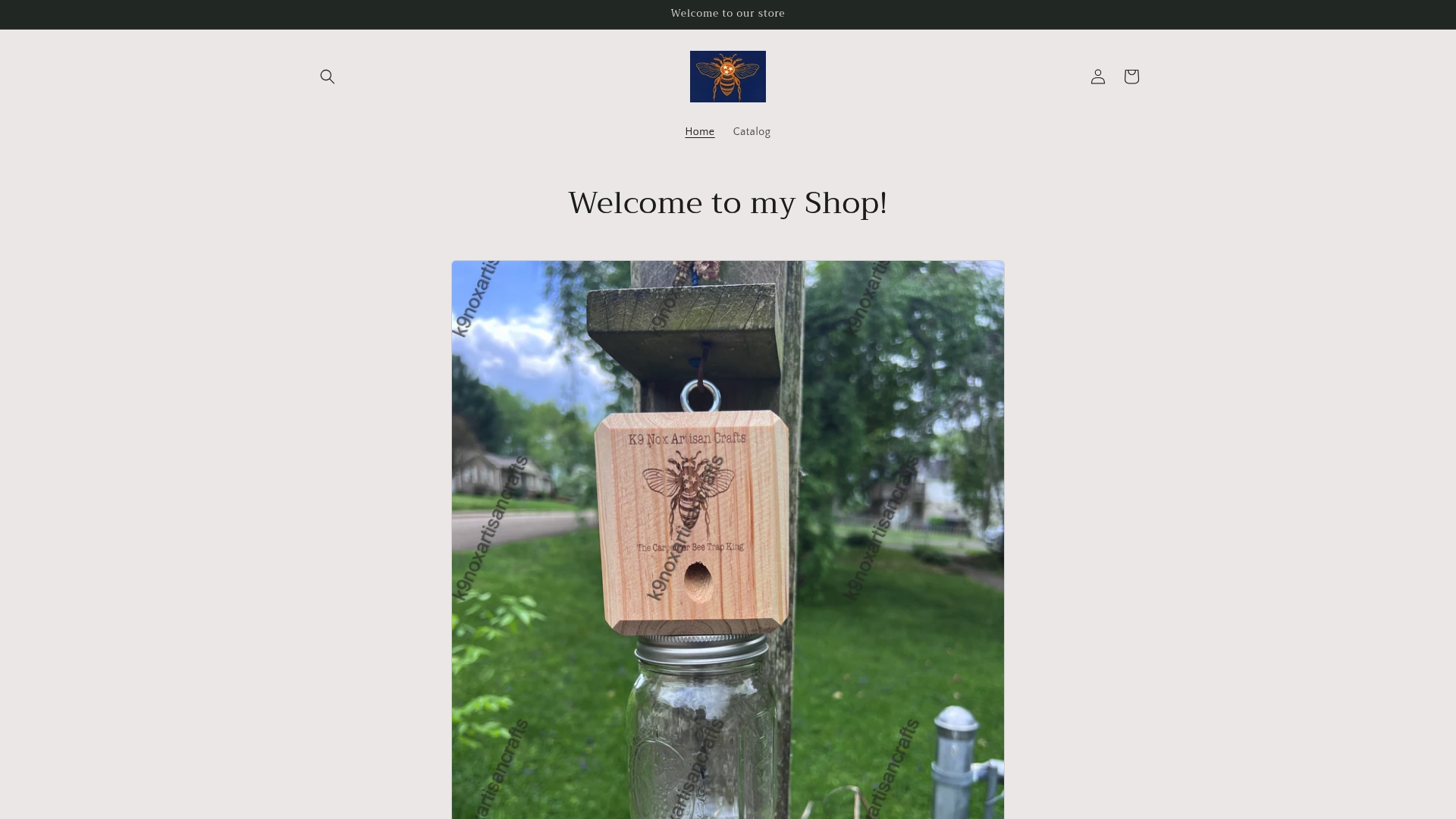
K9 NOX ARTISAN CRAFTS offers handcrafted carpenter bee traps that provide an eco-friendly solution for reducing bee populations around your home. These traps work by mimicking natural nesting sites, attracting adult bees into chambers where they’re safely contained. Position traps near vulnerable wooden structures like decks, eaves, and fences for maximum effectiveness.
Using these artisan-crafted products complements the preventative maintenance and treatment steps you’ve just learned. Traps intercept bees during their active spring and summer seasons, preventing them from boring new entrance holes. This proactive approach protects your investment in wooden outdoor spaces while avoiding harsh chemical applications. Explore the full range of solutions at K9 NOX ARTISAN CRAFTS to find the right fit for your property’s specific needs.
Frequently asked questions
What exactly is carpenter bee-infested wood?
Carpenter bee-infested wood is any wooden structure containing tunnels and galleries created by female carpenter bees for nesting purposes. The wood shows round entrance holes about half an inch wide, with internal tunnels extending several inches along the grain. Unlike termite damage, the wood itself isn’t consumed but structurally weakened by the tunnel network.
How can I tell carpenter bees apart from bumblebees?
Carpenter bees have shiny, completely black abdomens without hair, while bumblebees display fuzzy bodies with distinct yellow and black bands. Carpenter bees appear larger and more robust. Behavioral differences include carpenter bees hovering near wood structures and bumblebees foraging on flowers. Only female carpenter bees can sting, whereas both male and female bumblebees sting.
What’s the best time of year to inspect for carpenter bee activity?
Early spring between March and June offers the optimal inspection window when adult carpenter bees emerge from winter dormancy and begin excavating nests. You’ll observe the most activity during warm, sunny days when bees actively bore holes and provision galleries. Fall inspections also help because bees seek overwintering sites, but spring detection prevents breeding season damage.
What quick prevention tips can protect my wooden structures?
Paint or stain all exposed wood surfaces to create barriers that discourage boring activity. Fill existing cracks and holes with wood putty immediately. Replace severely damaged sections containing extensive tunnels. Reduce moisture around wooden elements through proper drainage and ventilation. Position carpenter bee traps near vulnerable areas to capture adults before they establish nests.
Should I treat active carpenter bee nests myself or call a professional?
Homeowners can safely treat most carpenter bee infestations using insecticidal dust applied into entrance holes at dusk when bees are less active. Wear protective clothing and follow product label instructions carefully. Call professionals if you discover extensive damage affecting structural integrity, have severe bee allergies, or find infestations in hard-to-reach areas like high eaves. Professionals have specialized equipment and expertise for complex situations.
Do carpenter bees return to the same wood year after year?
Yes, carpenter bees exhibit strong site fidelity and often return to the same wooden structures across multiple generations. Young bees frequently emerge from natal tunnels and bore new galleries nearby or expand existing ones. This behavior explains why untreated infestations worsen over time as tunnel networks multiply. Sealing old holes after treatment prevents this return behavior and protects your wood from recurring damage.